
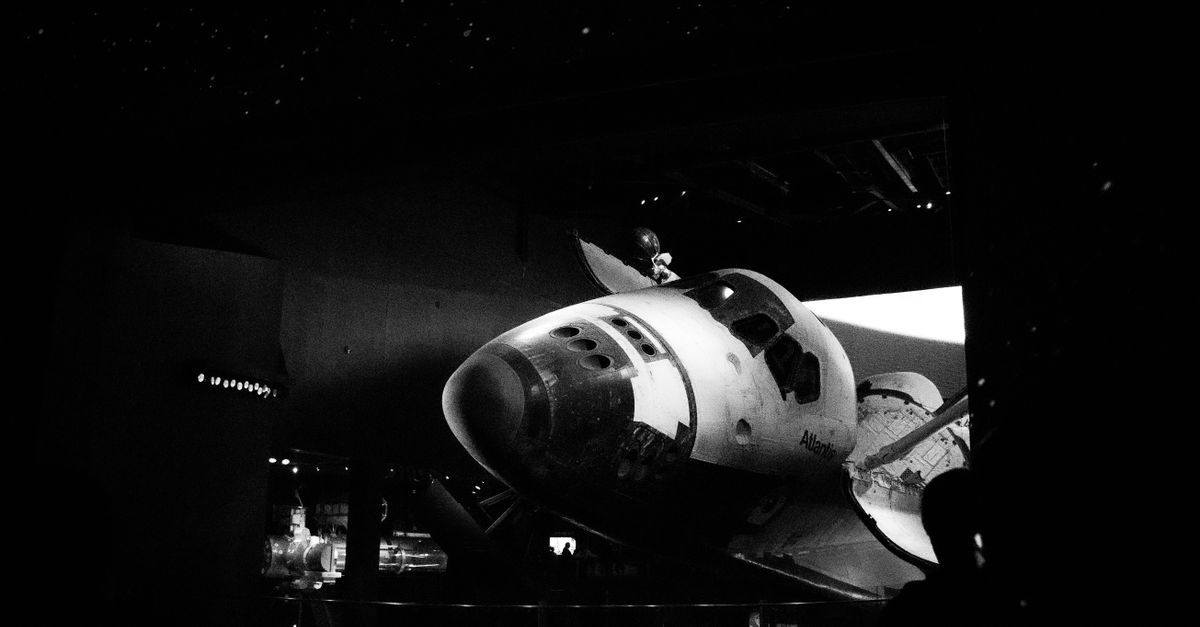
Space technology is undergoing a rapid transformation driven by commercialization, digitalization, and sustainability goals. Governments are no longer the sole drivers of space programs; private companies, startups, and international partnerships now play decisive roles. At the center of this shift are reusable launch systems, which are redefining how frequently, affordably, and reliably payloads can reach orbit.
Reusability as a Catalyst for Lower Costs and Broader Access
Reusable launch systems are transforming the financial landscape of spaceflight, as rockets once discarded after a single mission and driving up costs are now being recovered and refurbished, with particular attention given to first-stage boosters.
Major effects arising from reusability encompass:
- Achieves launch cost cuts of roughly 60–70 percent when compared with fully expendable platforms.
- Enables a markedly faster launch tempo, making weekly and potentially daily flights possible.
- Reduces barriers for startups, universities, and emerging spacefaring nations.
A prominent example is the Falcon 9, whose boosters have flown more than 15 times each, demonstrating that reuse can be both reliable and profitable. This model is now being adopted globally, with similar concepts under development in Europe and Asia.
Swift Iteration and Agile-Focused Engineering
A further key trend involves moving away from conventional aerospace development toward swift prototyping and continuous experimentation, as companies increasingly construct, evaluate, learn from failures, and refine their systems within mere months rather than spending decades on design.
This method offers multiple key benefits:
- Accelerated innovation rhythms paired with more rapid technology verification.
- Reduced development exposure achieved through step-by-step enhancements.
- Ongoing performance refinement guided by actual flight data.
The use of iterative testing has enabled the development of fully reusable launch vehicles that integrate landing legs, grid fins, and autonomous guidance systems with increasing precision.
Cutting-Edge Materials and Contemporary Manufacturing Methods
Material science is playing a crucial role in the evolution of space technology. Lightweight alloys, carbon composites, and heat-resistant materials are enabling rockets to withstand repeated launches and reentries.
Equally important is the rise of advanced manufacturing:
- Additive manufacturing, or industrial 3D printing, reduces part counts and production time.
- Automated welding and robotic assembly improve consistency and safety.
- Digital twins allow engineers to simulate wear and performance before physical testing.
These technologies collectively increase reliability while lowering long-term maintenance costs for reusable systems.
Artificial Intelligence and Self-Governing Operations
Artificial intelligence is increasingly embedded in both spacecraft and launch infrastructure. Autonomous systems manage navigation, landing, anomaly detection, and predictive maintenance.
Examples of AI-driven capabilities include:
- Real-time trajectory optimization during ascent and descent.
- Automated inspection of returned boosters using computer vision.
- Predictive analytics that forecast component fatigue and service intervals.
As launch cadence increases, autonomy becomes essential to managing complexity without proportional increases in human oversight.
Small Satellites and Constellation Demand
The growing deployment of small satellites and expansive orbital constellations is increasingly shaping how reusable launch systems are conceived, as Earth observation, global broadband, and Internet of Things services depend on steady, dependable launch schedules instead of occasional heavy‑lift flights.
Such demand benefits:
- Medium-lift reusable rockets optimized for repeated missions.
- Dedicated rideshare and responsive launch services.
- Rapid turnaround between flights to maintain constellation deployment schedules.
Reusable systems suit these requirements by delivering consistent costs and adaptable launch schedules.
Sustainability and Environmental Pressure
Environmental factors are increasingly influencing strategies in space technology, as reusability curtails production waste, reduces material use, and limits debris generated by discarded stages.
Further developments in sustainability encompass:
- Propellants engineered to burn cleaner, generating far less soot and fewer overall emissions.
- Configurations developed to limit orbital debris and facilitate managed reentry procedures.
- Lifecycle evaluations that track environmental effects from initial production through final disposal.
As regulatory scrutiny increases, environmentally responsible launch systems are likely to gain competitive advantages.
Geopolitical Competition and Strategic Autonomy
Space continues to serve as a strategic arena, and reusable launch systems are increasingly regarded as key components of national resilience. Nations pursue autonomous access to orbit to support communications, navigation, defense activities, and scientific exploration.
This has led to:
- Public investment in domestic reusable launch programs.
- Partnerships between space agencies and private companies.
- Competition to achieve faster, cheaper, and more reliable access to orbit.
A worldwide surge in innovation is unfolding, and several reusable systems are anticipated to come into operation within the coming decade.
A Converging Path Toward Routine Spaceflight
Access to space is steadily shifting from an extraordinary endeavor to a familiar routine, driven by evolving trends in space technology and reusable launch systems. Reusability, digital-first engineering, autonomous operations, and sustainability are blending into a fresh operational approach that treats rockets as high-performance aircraft rather than single-use machines. As these capabilities advance, space activity is expected to grow into sectors such as manufacturing, energy production, and sustained human habitation, reshaping how humanity interacts with Earth’s orbit and the wider expanse beyond.